
Binding the Narrative: How Bondage Reframed Power, Pleasure, and Professionalism in Adult Media
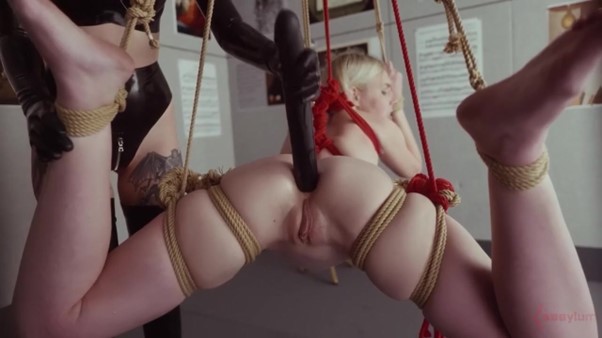
Binding the Narrative: How Bondage Reframed Power, Pleasure, and Professionalism in Adult Media
The most controversial word in adult entertainment has never been “sex.” It’s “control.” Few genres make that tension more legible than bondage: a visual language of limits, responsibility, and negotiated play that either unsettles viewers or converts them on the spot. Forget the tropey latex-and-darkness clichés – today’s bondage is a studio discipline as much as a fantasy palette, shaped by checklists, safewords, and camera teams who treat trust like lighting. For an at-a-glance look at how curation has evolved, see Bondage Mod Porn not as a finish line, but as a doorway into a craft built on clarity more than shock.
If you want the elevator pitch of why this category matters, it’s this: bondage forces a conversation with the viewer about how power gets shared, staged, and verified. It’s also where modern production values meet old-school ethics. You can’t fake safety at scale; you have to build it. Even the phrase we toss around to explain production culture – “<a href=”https://modporn.com/”>behind the scenes</a>” – lands differently here. What the audience doesn’t see (pre-scene briefings, risk checks, aftercare) is the reason what they do see feels audacious instead of alarming. That invisible scaffolding is the story.
What Bondage Actually Is – And What It Is Not
Start by stripping away the easy misconceptions. Bondage on camera is not a filmed free-for-all, nor is it a nihilistic endurance test. Done correctly, it is a choreography of consent in which constraint is the medium, not the message. The rope, cuffs, tape, spreader bar, or custom rig are tools for intensity and focus; they are not shortcuts to dominance or humiliation. A well-run set treats every restraint like a spotlight: it narrows options so attention can expand.
The ethic begins long before the red light blinks. Performers and directors map boundaries in practical terms – green (yes), yellow (maybe), red (no) – and they make those maps legible to the whole crew. If rope is involved, a trained rigger isn’t a luxury; they’re the difference between theatrical tension and real-world risk. Circulation checks, nerve-safety briefings, quick-release cutters, hydration plans – these aren’t mood killers; they are the mood’s insurance policy.
Consent isn’t a single signature; it’s a temperature that’s monitored throughout the shoot. The best productions treat “ongoing consent” as a visible rhythm: scene pauses to check in, an agreed-upon gesture to halt movement, a safeword everyone can hear and honor instantly. You can sense the maturity of a set by how unremarkable these moments feel. They’re not interruptions. They’re beats.
Skeptics often ask whether bondage glamorizes harm. The data point professionals return to is deceptively simple: performers who feel safe perform better and finish happier. That isn’t moral window dressing – it’s a business reality. Viewers can read anxiety in micro-expressions. They can also read trust. The latter retains audience and defuses complaints; the former sparks moderation headaches. In an era of stricter platform rules and payment scrutiny, prudence is not purity; it’s survival.
For readers who want a research-backed starting place for consent frameworks and risk-aware practices that inform real sets, the National Coalition for Sexual Freedom hosts accessible primers and resource links used across the industry, from language guides to best-practice checklists. These aren’t scripts to recite. They’re a shared grammar so improvisation stays safe.
The Aesthetics of Restraint: How Bondage Became a Cinematic Discipline
Bondage earns its keep visually when it remembers it’s about tension – not just between bodies, but inside the frame. The camera is a collaborator in that tension. Wide shots show environment, rigging, and relative power; close-ups tell the truth about how the scene lands: the exhale, the skin flush, the hand squeeze that says “keep going” more clearly than any spoken line. Good directors sequence these shots like music. The arc is legible: anticipation, crescendo, resolve.
Lighting choices matter more here than in almost any other category. Hard light carves, soft light forgives; both can be honest. What doesn’t work is flattering haze that hides marks the performer wants visible, or lurid contrast that turns the scene into a cartoon. The modern look borrows from fashion: sharp sources for rope geometry, warm fill for faces, practical lamps that keep the world believable. The goal is to make control readable, not merely implied.
Sound carries unusual weight. Bondage is as much about what’s heard as what’s seen: the hitch in a breath when a knot tightens, the mutual laugh when a cuff sticks, the clear verbal check-in that lands like a nod to the audience – “we’re piloting this together.” Over-scoring bulldozes those details; under-scoring can leave them brittle. Editors who understand the genre cut on responses, not just actions. A cut away when tension spikes can be hotter than staying, precisely because it lets the imagination stretch across the gap.
Wardrobe and props do narrative labor. Leather reads one way; linen reads another. A sterile studio sells precision; a sunlit bedroom sells intimacy; a black-box set sells theater. None of these are neutral. A rope color that pops against skin isn’t an Instagram trick; it’s visual literacy. Viewers have to see where pressure lives to understand what’s being negotiated.
Then there’s the rigging itself – the part casual viewers assume is plug-and-play and professionals know is a craft measured in years, not weekends. Safe suspension requires redundancy, weight ratings, practiced hands, and a plan for descent if something, anything, feels off. Camera teams pre-visualize angles so they never ask for a pose the rig can’t safely hold. A rigger who says “no” is a production’s best investment. That “no” is what gives the “yes” its voltage.
Performance culture adapts accordingly. In bondage, eye contact can be louder than dialogue; a nod can steer the whole ship. The dominant partner (or “top”) often works twice as hard: managing pace, signaling reassurance, leaving breadcrumbs of aftercare even mid-scene (a hand squeeze, a whispered check-in, a bottle of water within reach). Viewers spot this stewardship and, often subconsciously, reward it. It’s not about “nice.” It’s about competence.
Editing decisions finish the job. Bondage that reads as respectful is almost always bondage that reads as coherent. We see how we got here; we see choices being made; we see resolution that looks like care, not abandonment. The final frames – untied knots, exchanged smiles, a blanket, a snack – are not fluff. They’re the epilogue the nervous system expects. Skip them and the experience can feel abrupt even if nothing technically went wrong.
The Business, the Backlash, and the Playbook for Doing It Right
Bondage thrives or fails on trust – between performers, with platforms, and, increasingly, with payment processors who enforce their own standards. The studios that last accept a blunt constraint: if your safety culture is performative, your distribution will be, too. That’s why robust documentation has become as normal as call sheets. Model releases are paired with risk notes. Emergency protocols are printed and posted. A crew member is designated as a dedicated check-in. None of this looks glamorous in a BTS reel. All of it reads in the final cut.
Discovery is its own puzzle. Thumbnails must hint at intensity without tripping policy filters; titles lean descriptive over lurid; tags do curation, not carpet-bombing. There’s a reason the category’s most dependable performers cultivate parasocial trust: when your audience believes you work with partners who respect you, the content earns repeat viewing. The “myth of the edgelord” (shock for shock’s sake) is the category’s shortest runway. The “craft of the caretaker” is the long one.
Backlash cycles are predictable. A mainstream outlet rediscovers the category every few months, writes as if it sprang full-formed from a dark alley yesterday, and treats consent – when it notices consent at all – as a fig leaf. The counter is not scolding; it’s transparency. When studios publish their protocols and show their aftercare, the narrative has to become more nuanced: “they planned this,” “they checked,” “they ended together.” That doesn’t inoculate against moral panic, but it gives neutral readers a vocabulary beyond “yikes.”
Legal geography still matters. What flies in one jurisdiction might draw scrutiny in another; the difference is often less about content than about documentation and marketing language. If your copy reads as bragging about harm, expect trouble – even if your footage shows the opposite. Smart companies scrub promotional language as rigorously as they review cuts. Words make assumptions; assumptions invite enforcement.
Monetization is quietly shaped by something viewers rarely consider: complaint rate. Bondage with clear boundaries spawns fewer tickets. That lowers moderation load, reduces chargebacks, and builds goodwill with processors who prefer clean ledgers. The economics of care aren’t sentimental. They show up as fewer red flags, longer shelf life, and better placements in recommendation engines tuned to “satisfaction” rather than “shock.”
There’s also a generational knowledge transfer underway. Veterans trained on rope jams, theater rigs, and community workshops are publishing primers, mentoring, and insisting that technique be treated like a trade rather than a party trick. That insistence is paying off. You can see it in cleaner ties on camera, in fewer numb-hand anecdotes, in talent who leave a shoot eager to return rather than needing three days to recover from someone else’s ego.
So what’s the playbook for getting it right?
1) Put safety on the call sheet, not in the blooper reel. Assign roles: rigger, safety lead, consent liaison. Print the protocol. Run the drill. If it feels excessive, it’s probably appropriate.
2) Build the scene like a sentence. Subject (who), verb (what), object (with what), punctuation (how it ends). If you can’t finish that sentence before rolling, you’re gambling.
3) Light for honesty. Make power legible. Don’t hide marks the performer wants shown. Don’t glamorize what the performer wants softened. Ask. Then light.
4) Cut on responses, not just actions. The face is the plot. Treat it that way.
5) Publish the ethos where viewers can see it. An FAQ that states your consent policy converts more skeptics than the edgiest trailer.
6) Treat aftercare as canon. Roll on it. Include a beat of it in the final. It’s not “ruining the fantasy.” It’s proving it was a fantasy, made with care.
7) Keep learning. Rope changes with bodies, settings, fatigue, humidity. The arrogance of “I’ve got this” is the one risk you can’t rig around.
Bondage didn’t become a mainstay because people suddenly discovered restraint. It became durable because professionals figured out how to translate a centuries-old practice into camera language without losing its soul. The charge isn’t torture; it’s trust. The spectacle isn’t pain; it’s precision. What looks transgressive at a glance often reads, on second look, like radical attentiveness.
And that’s why the category keeps gaining, not crashing, through cultural cycles. Viewers – especially the ones who arrive wary – are not looking for chaos. They’re looking for evidence that bodies can stage intensity without sacrificing dignity. Bondage, when it’s done with brains and heart, is the proof of concept. It shows the math: limits articulated, power shared, energy aimed, care delivered. The ropes are props. The real binding agent is professionalism.
In the end, control is the wrong villain. The camera has always been about control – framing, focus, timing. Bondage simply makes that explicit and asks the audience to measure it with sharper eyes. When the knots come off and the lights cool, what remains is the feeling the best scenes deliver – of having witnessed something demanding that left everyone in the room more awake, more respected, more themselves. That’s not a contradiction. That’s the point.


